
Wisdom Teeth Evaluation: Symptoms That Mean It’s Time for an Exam
May 20, 2026 9:00 amWisdom teeth are the third molars in the very back of the mouth, and they usually begin developing or trying to come in during the late teen years or early adulthood. Some people have all four wisdom teeth, while others may have three, two, one, or none at all. They also do not always behave the same way from person to person.
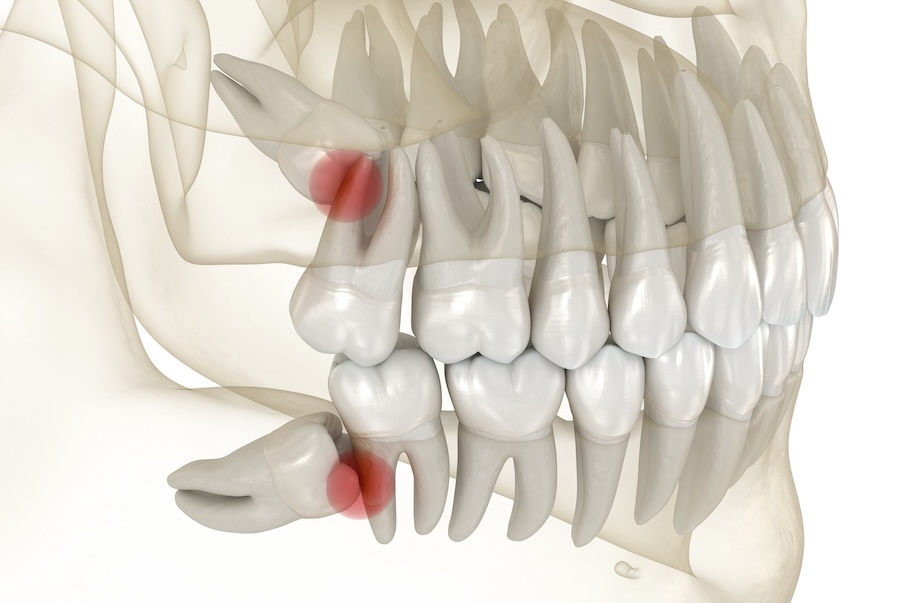
For some patients, wisdom teeth come in straight, have enough room, and never cause much trouble. For others, they come in at an angle, stay partly covered by gum tissue, press against the tooth beside them, or remain trapped under the gums. That is when symptoms like soreness, swelling, food trapping, jaw pressure, or a bad taste can start to show up.
Because wisdom teeth can cause problems before they are easy to see in the mirror, an evaluation is helpful when symptoms keep returning, the gums feel irritated, or you are unsure whether there is enough room for the teeth to come in normally.
At Blue Valley Smiles in Overland Park, KS, Dr. Rachel Karabas and Dr. Graham Naasz help patients understand whether wisdom teeth are developing normally or starting to cause problems. An evaluation can show where the teeth are positioned, how they are affecting the surrounding gums and teeth, and whether treatment is needed now or simply something to monitor.
Pain in the Back of the Mouth
Pain near the very back of the mouth is one of the most common reasons patients ask about wisdom teeth. The discomfort may feel dull, sore, sharp, or pressure-like. Sometimes it happens only while chewing, while other times it lingers throughout the day.
This pain can happen when a wisdom tooth is trying to come in but does not have enough room. The tooth may push against the gum tissue, press into the tooth next to it, or sit partly trapped under the gums. As the area becomes irritated, chewing and brushing may become uncomfortable.
Pain does not always mean the wisdom tooth needs to come out right away, but it does mean the area should be checked. A dental exam and X-rays can show whether the tooth is erupting normally, impacted, infected, or causing pressure on the neighboring molar.
If pain keeps returning in the same back corner of your mouth, do not keep guessing. Wisdom tooth problems are often easier to manage when they are evaluated before the area becomes swollen or infected.
Swollen or Tender Gums Behind the Molars
Swelling behind the back molars can be a sign that a wisdom tooth is partly erupting or irritating the surrounding tissue. You may notice that the gums look red, puffy, or tender. The area may bleed when brushing or feel sore when food touches it.
When a wisdom tooth only comes in partway, a small flap of gum tissue can remain over part of the tooth. Food particles and bacteria can get trapped under that tissue, creating irritation and sometimes infection. This is one reason partially erupted wisdom teeth can become uncomfortable even if the tooth itself is not badly decayed.
Tender gums in that area can also make cleaning difficult. When brushing hurts, it is tempting to avoid the spot, but that can allow more plaque to collect and make the irritation worse.
If the gum tissue behind your molar feels swollen or sore for more than a few days, schedule an evaluation. Dr. Rachel Karabas or Dr. Graham Naasz can check whether a wisdom tooth is the cause and explain what needs to happen next.
Jaw Pressure or Tightness
Wisdom teeth can sometimes create a sense of pressure in the jaw. This may feel like tightness near the back teeth, soreness when opening wide, or a dull ache that seems to spread toward the jaw joint or ear.
Jaw pressure can happen when a wisdom tooth is angled, impacted, or pushing against nearby teeth and tissues. The pressure may come and go, especially if the tooth is slowly trying to erupt. Some patients notice it more in the morning, after chewing, or when opening wide.
Not all jaw tightness comes from wisdom teeth. Clenching, grinding, TMJ issues, sinus pressure, and muscle tension can also cause similar symptoms. However, if jaw pressure is paired with back-of-mouth soreness, swollen gums, or a bad taste, wisdom teeth become more suspicious.
An evaluation helps separate wisdom tooth pain from other causes of jaw discomfort. That matters because the right treatment depends on the source of the pressure.
Difficulty Opening Your Mouth Comfortably
If a wisdom tooth area becomes inflamed or infected, it can sometimes make it harder to open your mouth fully. You may feel stiffness in the jaw, soreness when yawning, or discomfort when trying to take larger bites.
This can happen because inflammation in the back of the mouth can affect the nearby muscles and tissues. When the area is irritated, the jaw may feel guarded or tight. In some cases, swelling can make normal movement more uncomfortable.
Difficulty opening should not be ignored, especially if it comes with swelling, fever, bad taste, drainage, or increasing pain. These symptoms may point to infection around a partially erupted wisdom tooth.
If opening your mouth feels noticeably harder than usual, call the dentist. A prompt evaluation can help determine whether the issue is related to wisdom teeth or something else that needs attention.
Bad Taste or Bad Breath That Comes From the Back of the Mouth
A bad taste near the back of the mouth can happen when bacteria and food debris collect around a wisdom tooth. This is especially common when the tooth is partially covered by gum tissue or difficult to clean well.
You may brush, floss, or use mouthwash and still notice the taste returning. That can happen because the problem is tucked under gum tissue or behind the molar, where a toothbrush may not fully reach. If infection is present, there may also be drainage or a bad odor.
Bad breath has many possible causes, including dry mouth, tongue buildup, cavities, gum disease, and tonsil stones. However, when it seems to come from one back corner of the mouth, a wisdom tooth should be checked.
A dental evaluation can show whether the wisdom tooth area is trapping bacteria or whether another issue is causing the odor. Either way, it is better to treat the source than keep covering it up with mints or mouthwash.
Food Getting Stuck Behind the Last Tooth
Food trapping behind the last molar is a common sign that a wisdom tooth may be partly erupted or poorly positioned. You may feel like something is always stuck back there, even after brushing. Floss may not reach the area well, and rinsing may only help for a short time.
When wisdom teeth come in at an angle or only break through the gums partially, they can create small pockets where food collects. These areas can be hard to clean and may lead to cavities, gum irritation, or infection.
Food trapping can also affect the tooth in front of the wisdom tooth. If bacteria stay packed between the wisdom tooth and the second molar, decay may develop on the back side of the second molar, which can be difficult to treat.
If you keep digging food out from the same back area, it is worth having the wisdom tooth evaluated. The issue may not improve on its own if the tooth position is creating the trap.
Swelling in the Cheek or Jaw
Swelling near the cheek, jaw, or back of the mouth may mean the wisdom tooth area is infected or inflamed. The swelling may start small and then become more noticeable, especially if the tooth is partly trapped under the gum tissue.
You may also notice warmth, tenderness, a bad taste, or pain that spreads. In some cases, the gums around the wisdom tooth may look red or swollen. If the infection worsens, you may feel generally unwell or develop a fever.
Swelling should be checked promptly. Dental infections can spread, and wisdom tooth infections are not something to wait out if symptoms are increasing.
If swelling affects swallowing, breathing, or spreads rapidly through the face or neck, seek urgent medical care. Otherwise, call Blue Valley Smiles so the area can be evaluated and treated appropriately.
Headaches or Ear-Area Discomfort
Wisdom tooth problems can sometimes cause discomfort that feels like it is coming from the ear, jaw, or side of the head. This happens because the back teeth, jaw muscles, and surrounding nerves are close together, so pain can feel like it travels.
A wisdom tooth that is impacted or inflamed may create pressure that radiates toward the ear. You may feel a dull ache, pressure, or soreness that does not seem to come from one specific tooth. This can be confusing because ear discomfort can also come from sinus issues, jaw clenching, or an actual ear problem.
If the discomfort is paired with back molar pain, gum swelling, food trapping, or jaw stiffness, wisdom teeth should be considered. An exam can help identify whether the source is dental or whether another type of care may be needed.
Do not assume ear-area pain is automatically wisdom teeth, but do not ignore it if it keeps showing up with other mouth symptoms.
Crowding or Pressure Against Nearby Teeth
Some patients worry that wisdom teeth are pushing their other teeth out of place. Wisdom teeth can place pressure on nearby molars when they come in at an angle, but crowding is usually more complicated than one tooth pushing everything forward.
Still, an angled wisdom tooth can damage or irritate the second molar beside it. It may press into the tooth, trap plaque between the teeth, or create a space that is difficult to clean. Over time, this can increase the risk of decay or gum problems around the neighboring molar.
You may feel pressure, tightness, or soreness in the back of the mouth. Sometimes there are no symptoms, and the issue is only seen on an X-ray.
An evaluation can show whether a wisdom tooth is angled toward another tooth and whether it is likely to cause damage. This is one reason wisdom teeth are often monitored even before they cause obvious pain.
Cavities or Gum Problems Around a Wisdom Tooth
Wisdom teeth are located far back in the mouth, which makes them harder to clean. Even when they come in fully, brushing and flossing around them can be more challenging than cleaning other teeth.
If plaque collects around a wisdom tooth, cavities can form on the wisdom tooth itself or on the tooth next to it. Gum inflammation can also develop if bacteria remain trapped near the gumline.
Cavities in wisdom teeth can be difficult to restore depending on the tooth’s position. If the tooth is hard to reach, angled, or not useful for chewing, removal may be recommended instead of placing a filling.
During a wisdom tooth evaluation, your dentist will look at both the wisdom tooth and the neighboring molar. The goal is to protect the area as a whole, not just focus on the tooth causing the most obvious symptoms.
Symptoms That Come and Go
Wisdom tooth symptoms often come and go, which can make them easy to ignore. A tooth may flare up for a few days, settle down, and then start bothering you again weeks or months later.
This pattern is common with partially erupted wisdom teeth. Food and bacteria may irritate the area, swelling develops, and then symptoms improve after cleaning or rinsing. However, if the tooth position has not changed, the problem may return.
Recurring symptoms are a sign that the wisdom tooth area may not be cleaning or functioning well. Even if the pain is not severe, repeated flare-ups can point to a problem that deserves attention.
If you keep having the same back-of-mouth discomfort every so often, schedule an evaluation. It is better to understand what is causing the pattern than wait for the next flare-up to be worse.
Why X-Rays Matter for Wisdom Teeth
Wisdom teeth can be difficult to evaluate by looking in the mouth alone. A tooth may be fully under the gums, partly covered by bone, angled toward another tooth, or positioned near important structures. X-rays help show what cannot be seen during a visual exam.
With imaging, your dentist can check the angle of the wisdom tooth, root development, available space, and relationship to nearby teeth. For lower wisdom teeth, imaging may also help show how close the roots are to nerves in the jaw.
This information helps determine whether the tooth can be monitored, whether removal may be recommended, and how involved the extraction might be. Not every wisdom tooth needs treatment right away, but X-rays make the decision more informed.
At Blue Valley Smiles, Dr. Rachel Karabas and Dr. Graham Naasz can use your exam and imaging to explain what is happening and what options make sense for your situation.
When Wisdom Teeth May Need to Be Removed
Wisdom teeth may need to be removed if they are impacted, painful, infected, damaging nearby teeth, causing repeated gum inflammation, or too difficult to clean. Removal may also be recommended if the wisdom tooth has decay that cannot be restored predictably.
Timing depends on the tooth and the patient. Sometimes removal is recommended before symptoms become severe because the tooth’s position makes future problems likely. Other times, a wisdom tooth can be monitored if it is not causing issues and can be cleaned well.
Age can also affect the conversation. Wisdom teeth may be easier to remove before the roots are fully developed and before the surrounding bone becomes denser. However, adults can still have wisdom teeth evaluated and removed when needed.
The recommendation should be based on the tooth’s position, symptoms, risks, and long-term outlook. A clear explanation can help you feel less like you are guessing and more like you understand the reason behind the plan.
Wisdom Teeth Evaluation in Overland Park, KS at Blue Valley Smiles
Wisdom teeth symptoms can include back-of-mouth pain, swollen gums, jaw pressure, food trapping, bad taste, cheek swelling, ear-area discomfort, or symptoms that keep coming back. Even mild symptoms are worth checking if they return or seem to come from the same area.
At Blue Valley Smiles in Overland Park, KS, Dr. Rachel Karabas and Dr. Graham Naasz evaluate wisdom teeth with careful exams and imaging so patients understand what is happening beneath the surface. Some wisdom teeth can be monitored, while others may need treatment to prevent pain, infection, or damage to nearby teeth.
If the back of your mouth has been sore, swollen, or difficult to clean, schedule a wisdom teeth evaluation with Blue Valley Smiles. A clear exam can help you know whether your wisdom teeth are coming in normally or whether it is time to talk about removal.
FAQs
What are common symptoms of wisdom teeth problems? Common symptoms include pain in the back of the mouth, swollen gums, jaw pressure, difficulty opening, bad taste, bad breath, food trapping, cheek swelling, and discomfort near the ear or jaw.
Do wisdom teeth always need to be removed? No, not every wisdom tooth needs removal. If the tooth comes in straight, has enough room, stays healthy, and can be cleaned well, it may be monitored. Removal may be recommended if the tooth is impacted, infected, painful, or damaging nearby teeth.
Why does my wisdom tooth pain come and go? Pain may come and go if the gum tissue around a partially erupted wisdom tooth becomes irritated, then calms down. If the tooth position still traps food or bacteria, symptoms may return.
Can wisdom teeth cause bad breath? Yes, partially erupted or hard-to-clean wisdom teeth can trap bacteria and food debris, which may lead to bad breath or a bad taste. A dental evaluation can show whether the wisdom tooth area is the source.
Can wisdom teeth cause jaw pain or ear pain? Wisdom teeth can sometimes cause pain that spreads toward the jaw or ear area because the back teeth and jaw structures are close together. However, jaw clenching, sinus issues, and ear problems can feel similar, so an exam is important.
When should I schedule a wisdom teeth evaluation? Schedule an evaluation if you have recurring pain, swelling, bad taste, food trapping, jaw stiffness, or discomfort in the back of your mouth. You should also be seen if symptoms are getting worse or affecting chewing, opening, or daily comfort.
CONTACT USCategorised in: Wisdom Teeth