
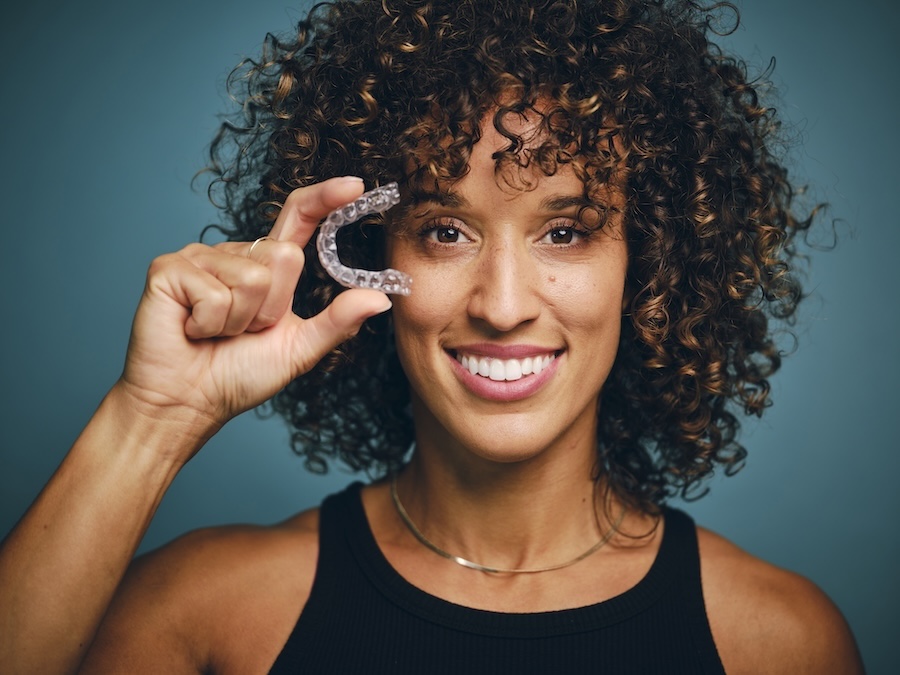
Invisalign vs SureSmile: What’s the Difference?
June 23, 2026 9:00 amWhen people begin looking into clear aligners, Invisalign is often the first name they hear. Then SureSmile comes up, and it can be hard to tell what is actually different beyond the name.
Both options use clear, removable trays that move teeth in small stages. You wear one set, switch to the next when your dentist tells you to, and your teeth gradually shift. So, at a glance, the daily experience can look pretty similar.
The differences show up more in how treatment is planned, what features may be included, and what the overall process looks like. SureSmile has its own digital planning system, the SureSmile™ Simulator for treatment previews, and may include VPro, a vibrating device used with aligners.
At Blue Valley Smiles in Overland Park, KS, Dr. Rachel Karabas and Dr. Graham Naasz offer SureSmile clear aligners. During an exam, they can look at your teeth, bite, crowding, spacing, and dental health before talking through whether SureSmile fits what you are trying to change.
What Invisalign and SureSmile Have in Common
Invisalign and SureSmile both use a series of custom clear aligners. Each tray is a little different from the one before it, which is how the teeth are guided through treatment over time.
You remove the aligners before meals and before drinking anything besides water. Afterward, you brush or rinse, put the trays back in, and go on with your day. For many people, that flexibility is the main draw. You can brush and floss normally, and you do not have brackets or wires to work around every time you eat.
However, aligners do create a new routine. Coffee is still fine, but the trays need to come out first. Snacking can take more effort because every snack means removing the trays, cleaning up, and putting them back in again. Also, it helps to keep the case with you when you are out. Clear aligners have a habit of disappearing when they get wrapped in a napkin at lunch.
With either system, wear time affects treatment. If the trays are out for long stretches, the teeth may not move enough for the next set to fit as planned. Then you may need more time in the current tray, extra aligners later, or a treatment timeline that starts to stretch out.
Digital Planning and Treatment Previews
Both Invisalign and SureSmile use digital software to plan treatment before the aligners are made. Your dentist reviews scans, photos, X-rays, tooth position, spacing, and how your bite comes together. From there, the software helps map out where the teeth may go and how the bite may change along the way.
Invisalign uses ClinCheck, while SureSmile has its own planning software and the SureSmile™ Simulator. Both systems can show you a preview of the treatment direction before you begin. With SureSmile, Dr. Karabas and Dr. Naasz can use the Simulator to show a 3D version of possible changes during the consultation.
That can be helpful when you are not only dealing with one crooked tooth. Maybe there is a front tooth that overlaps another, but there is also spacing farther back. Maybe your teeth have shifted since braces years ago, and now your bite feels different. Seeing the plan on a screen gives the conversation something concrete to work from instead of asking you to picture everything in your head.
The preview is not a promise that every tooth will move exactly like it does on screen. One tooth may take longer to rotate, or a small gap may need more attention near the end. However, it gives you a better idea of what treatment is trying to accomplish before you commit to a series of trays.
SureSmile Can Include VPro
VPro is one of the SureSmile features people often ask about once they hear it may be part of treatment. It is a small vibrating device used while the aligners are in place. You bite down on it for about five minutes a day, usually as part of your normal aligner routine.
The device helps the trays seat closely around the teeth. That close fit helps the aligners stay engaged, especially when you switch into a new set and the trays feel snug around certain teeth.
New aligners can bring some pressure with them. Maybe one tooth is rotating, or another is moving into a tighter spot. Either way, the first day or two in a new tray is often when patients notice treatment the most. VPro can help reduce that discomfort while also helping the trays settle into place.
It may also help treatment move along more efficiently in some cases. It does not replace wearing aligners as directed, and it cannot make up for trays that are left out too often. However, it can be a useful addition because it supports tray fit and makes the switch into a new set feel more manageable.
At Blue Valley Smiles, Dr. Karabas or Dr. Naasz can explain whether VPro would be part of your SureSmile plan and how it fits into the rest of treatment.
Attachments May Be Part of Either System
Attachments are small tooth-colored pieces placed on certain teeth during clear aligner treatment. They give the trays more grip when a tooth needs to rotate, move vertically, or shift in a more specific direction.
At first, attachments can sound like they will make aligners much more noticeable. In most cases, they are not nearly as obvious as brackets and wires. You may notice them in the mirror, especially up close, but most people you talk to are not studying your teeth that closely.
Both Invisalign and SureSmile can use attachments. The number and placement depend on the movements in your treatment plan. Some people need several, while others may only need a few.
Attachments can make a new aligner feel tighter because the tray is pressing more directly against those teeth. Once you get used to the routine, though, they usually become just another part of treatment.
SureSmile Can Treat More Than Minor Crowding
Clear aligners are often associated with straightening a few crowded front teeth. SureSmile can be used for that, but it may also be used for gaps, crowding, certain overbites, underbites, crossbites, and open bites.
That does not mean every orthodontic issue belongs in clear aligners. Some movements are better handled with braces. In other cases, dental treatment needs to happen before orthodontic treatment starts.
For example, untreated cavities, active gum disease, a broken crown, or a tooth that needs root canal treatment should be addressed first. Moving teeth around an existing dental problem does not fix the problem, and it can make the overall plan harder to manage.
Because of that, an in-person exam gives you much more useful information than a quick online smile quiz. A photo may show overlapping teeth or a gap near the front. However, it cannot show how the back teeth are meeting, whether certain teeth are taking too much pressure, or whether the gums and supporting bone are ready for orthodontic movement. Those details can change the type of treatment that makes sense.
Treatment Time Depends on the Case
People often want to know which option works faster. That makes sense, especially when you are trying to plan around a wedding, graduation, vacation, or simply the fact that you are tired of seeing the same tooth out of place in every photo.
The timeline usually comes down to the teeth and bite, not the brand name. Mild crowding may take less time than a case involving several rotated teeth, larger spaces, a deep bite, or a crossbite. Also, two smiles can look similar from the front while needing very different treatment once the bite is checked.
Wear time affects the schedule too. If aligners are left out too often, the teeth may fall behind the planned movement. Then you may need to wear a tray longer or use more aligners later.
VPro may support treatment efficiency in some SureSmile cases. Even so, the most useful estimate comes after Dr. Karabas or Dr. Naasz has looked at your teeth and bite in person.
Daily Life Feels Similar With Either Option
With Invisalign and SureSmile, you generally remove the trays before eating. Water is usually fine while the aligners are in. Coffee, tea, soda, wine, and other drinks are better with the trays out because they can stain the plastic or leave sugar and acid against the teeth.
This does not mean you have to give up coffee or stop going out to eat for months. It just changes the rhythm of your day a little. You take the trays out, have your meal or drink, rinse or brush when you can, and put them back in.
For many people, snacking is the bigger adjustment. A few small snacks throughout the day can turn into several extra times taking trays out and putting them back in. It is not a dealbreaker, but it does make you more aware of how often you are eating.
You also need to clean the trays regularly. Rinse them after you take them out, and use the cleaning method your dentist recommends. Hot water should be avoided because it can change the shape of the plastic.
What Does SureSmile Cost Compared With Invisalign?
SureSmile usually has lower lab fees than Invisalign. Because of that, it often falls into a lower overall price range, especially for straightforward or moderate cases.
The final fee still depends on what your teeth need. A small spacing issue will not have the same cost as a treatment plan that includes bite changes, more trays, refinement aligners, or a longer treatment timeline.
It also helps to compare what is included rather than only comparing a number at the bottom of an estimate. One plan may include digital scans, attachments, VPro, retainers, refinements, check-in visits, and whitening. Another may include some of those items but charge separately for the rest.
SureSmile is often the more budget-friendly clear aligner option. At Blue Valley Smiles, Dr. Karabas and Dr. Naasz can walk you through the treatment estimate and explain what is included before you decide.
Follow-Up Visits Track How Treatment Is Going
The digital preview gives you a starting point, but real teeth do not always follow the original plan exactly. Because of that, check-in visits are part of clear aligner treatment from the beginning, not something added only if there is a problem.
At these appointments, Dr. Karabas or Dr. Naasz can look at how the trays are fitting, whether attachments are still in place, and whether the teeth are moving close to the expected schedule. They can also check how your bite is changing as treatment moves forward, since a smile can look straighter while the back teeth are still settling into a different fit.
Sometimes a tooth simply needs a little longer in its current aligner. In other cases, a small gap may still be open near the end, or one rotated tooth may need more movement before everything lines up the way it should. When that happens, refinement trays can be used to finish those smaller adjustments rather than forcing the original plan to do more than it can.
Those visits keep treatment connected to what is actually happening in your mouth. The software gives the plan a direction, while the appointments let Dr. Karabas and Dr. Naasz respond to how your teeth are moving in real time.
Retainers Help Hold the Result After Treatment
Once the aligner phase is finished, the teeth still need help staying in their new positions. That is where retainers come in. Your teeth have been moving for months, and the tissues around them need time to adapt to that new placement.
Many patients start with more frequent retainer wear, then move to nighttime wear later. The exact schedule depends on your treatment plan, your bite, and how your teeth respond after the aligners are done. Dr. Karabas or Dr. Naasz will go over that part with you so you know what the routine should look like.
Without regular retainer wear, teeth can slowly begin drifting again. A front tooth may shift just enough to look different in photos, or a small gap can start to reopen over time. It usually does not happen all at once, which is part of why people are often surprised when an old retainer suddenly feels tight.
The trays may be finished, but keeping the result is still part of treatment. Retainers are what help protect the work you put into straightening your teeth.
How to Choose Between Invisalign and SureSmile
The brand name is only part of the decision. It helps to look at what treatment includes, what your teeth need, what the digital plan shows, and what feels realistic for your daily routine.
SureSmile can be a good option for patients who want clear aligners, a 3D preview through the SureSmile™ Simulator, VPro support, and a price range that is often lower than Invisalign.
During a consultation, ask to see the treatment preview. Ask whether VPro is included, how long treatment may take, what happens if refinements are needed, and what retainers will look like after treatment. Those answers tend to give you a clearer picture than a brand comparison by itself.
SureSmile Clear Aligners in Overland Park, KS
Invisalign and SureSmile both use clear aligners to move teeth gradually. The daily routine is similar with either option, and both may include attachments, check-ins, and retainers.
SureSmile adds its own digital planning system, the SureSmile™ Simulator for 3D treatment previews, and VPro, which can help aligners seat closely, reduce discomfort with new trays, and support treatment efficiency in some cases. It also often comes with a lower overall price range because SureSmile lab fees are generally lower.
At Blue Valley Smiles in Overland Park, KS, Dr. Rachel Karabas and Dr. Graham Naasz offer SureSmile clear aligners for crowding, spacing, and certain bite concerns. Schedule a consultation to talk through what you would like to change and see whether SureSmile fits your teeth, bite, and day-to-day routine.
FAQs
Is SureSmile the same as Invisalign?
No. SureSmile and Invisalign are separate clear aligner systems. Both use removable trays, but they use different planning software, treatment systems, and patient tools.
Does SureSmile have a treatment preview?
Yes. The SureSmile™ Simulator can show a personalized 3D preview of possible treatment changes before aligners are made.
What is SureSmile VPro?
VPro is a small vibrating device used with SureSmile aligners for about five minutes a day. It helps the trays seat closely, can reduce discomfort with new aligners, and may support treatment efficiency in some cases.
Is SureSmile usually less expensive than Invisalign?
SureSmile often has lower lab fees and generally falls into a lower overall price range than Invisalign. The final cost still depends on the complexity of your case and what is included in treatment.
Can SureSmile Treat Gaps and Crowded Teeth?
SureSmile may be used for crowding, spacing, and certain bite concerns. Whether it fits your case depends on your teeth, gums, bite, and the type of movement needed.
Do SureSmile Aligners Use Attachments?
They can. Attachments are small tooth-colored pieces placed on certain teeth to give aligners more control during movement.
Do I Need Retainers After SureSmile?
Yes. Retainers help keep teeth in their new positions after treatment. Without regular retainer wear, teeth can gradually shift over time.
CONTACT USCategorised in: SureSmile Aligners