
After a Root Canal: Eating, Sensitivity, and Follow-Up Care
August 24, 2026 9:00 amIf you just had a root canal, you may actually feel relieved more than anything else. The toothache that kept you up, made hot coffee miserable, or hurt every time you bit down may already be easing, and even a little post-treatment soreness can feel much better than the pain that brought you in. Of course, not every tooth that needs a root canal starts with severe pain; sometimes a crack, deep decay, or an infection found on an X-ray leads to treatment before the tooth becomes especially uncomfortable.
At Blue Valley Smiles in Overland Park, KS, Dr. Rachel Karabas and Dr. Graham Naasz will give you instructions based on the tooth that was treated and how much healthy structure is left. A back molar that already had a large filling may need a crown afterward, while another tooth may need a different final restoration. So the next few days are mostly about letting the area settle down, protecting the tooth while it heals, and finishing any restorative work that is still needed.
Some tenderness after a root canal is common, particularly if the tooth was inflamed or infected before treatment. If you had significant pain beforehand, that stronger throbbing or lingering temperature pain should begin to improve because the inflamed or infected pulp has been removed. If the tooth was treated before symptoms became severe, recovery may be fairly mild from the start.
After a Root Canal: What Should You Expect?
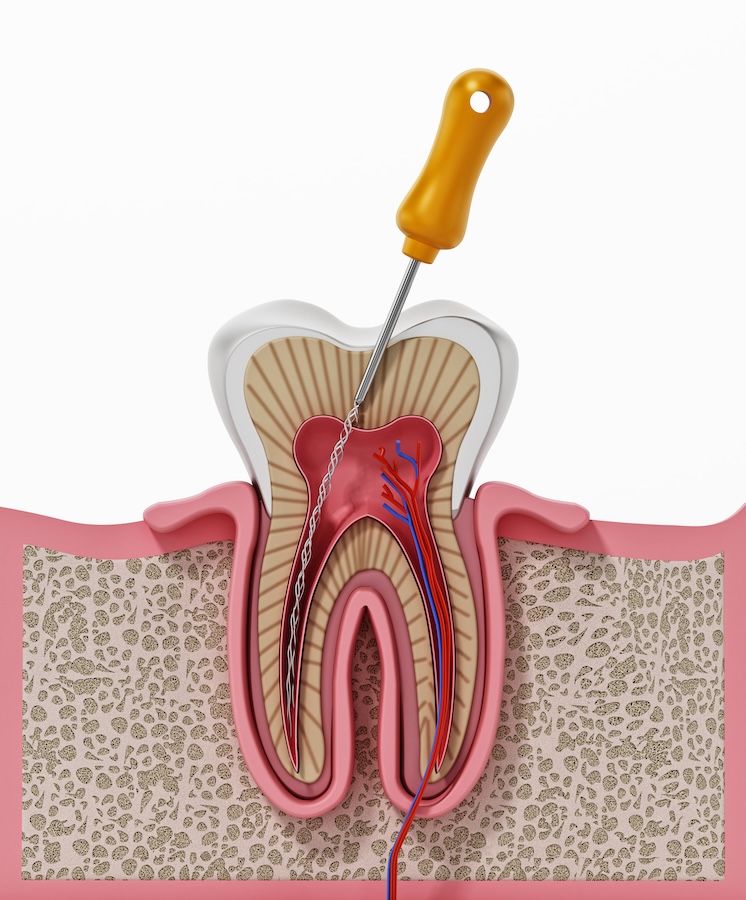
During a root canal, the inflamed or infected tissue inside the tooth is removed, and the canals are cleaned, shaped, and sealed. The tooth can still function afterward because the tissues around the root continue to support it. However, those surrounding tissues may stay tender for a few days, especially if the tooth was already sore when you bit down before treatment.
That tenderness usually feels more like bruising or pressure than the sharp pain that may have brought you into the office. You might notice the tooth when you chew or when it taps against the tooth above or below it. Then, as the inflammation settles, that soreness should gradually become less noticeable.
If the tooth has a temporary filling or crown, you will want to be gentler with that side until the permanent restoration is finished. The temporary is there to protect the tooth between visits, but it is not meant to take the same kind of chewing force as your final restoration. Once the permanent work is in place and the bite feels comfortable, you can usually return to normal chewing.
What Can You Eat After a Root Canal?
Once the numbness wears off, you can usually eat. Softer foods are often more comfortable at first, so eggs, yogurt, pasta, rice, fish, soft vegetables, and soup that is not too hot are all easy choices. If the tooth feels tender when you bite, chewing on the other side for a day or two can give it a break.
While you are still numb, though, wait before chewing. It is easy to bite your cheek, tongue, or lip when you cannot feel them properly, and hot foods can be harder to judge as well. Once normal feeling returns, you can ease back into eating based on how the tooth feels.
If there is a temporary filling or crown in place, avoid hard or sticky foods on that side. Ice, hard candy, caramel, and similar foods can loosen or damage a temporary restoration. You do not need to live on soft food for a week, but it helps to be a little selective while the tooth is still being protected.
Why the Tooth May Still Feel Sore When You Bite
It can seem odd that a tooth still feels tender after the nerve inside it has been removed. That soreness usually comes from the ligament and tissues around the root, which may still be irritated from the infection, inflammation, and treatment itself. So even though the inside of the tooth has been treated, pressure can still feel uncomfortable for a short time.
If the tooth was very inflamed beforehand, it may take a few days for that soreness to calm down. Over-the-counter pain medication can help in some cases if it is safe for you to take, but follow the instructions Dr. Karabas or Dr. Naasz gives you. Most people notice that the tooth becomes less noticeable as the days pass.
The bite can also play a role. If the treated tooth feels like it hits first every time you close your mouth, call Blue Valley Smiles. A small adjustment can sometimes take a surprising amount of pressure off the area and make chewing feel much better.
What About Hot and Cold Sensitivity?
If hot coffee or cold water was setting the tooth off before the root canal, that specific nerve response should no longer come from the treated tooth once the pulp has been removed. However, not every root canal is done because of temperature sensitivity. A crack, deep decay, or infection may be found before those symptoms ever become obvious.
Nearby teeth can still be sensitive, and when several teeth sit close together, it is not always easy to tell which one is reacting. The gums and surrounding tissues may also feel a little tender after the appointment. That general sensitivity usually settles as everything calms down.
If strong hot or cold sensitivity keeps happening and seems to come from the same area, mention it at your follow-up. Another nearby tooth may be the source, especially if it has a large filling, crack, or decay. Dr. Karabas or Dr. Naasz can test the surrounding teeth rather than assuming every sensation is part of root canal recovery.
How Long Should the Soreness Last?
Mild soreness often improves over a few days, although not every tooth follows the exact same timeline. A tooth that barely bothered you before treatment may settle quickly, while one that had a large infection or hurt badly when you bit down may stay tender a little longer. What you want is a general trend toward feeling better.
You may notice the tooth at every meal for the first day or two, then only when you bite something firmer, and then hardly at all. That kind of progression is common. If the pain is heading in the opposite direction and getting stronger, call the office.
The same goes for swelling, fever, a bad taste, drainage, or pain that suddenly becomes much worse after initially improving. Those symptoms are not something to just wait out. Dr. Karabas or Dr. Naasz can take another look and decide whether the tooth needs additional treatment or evaluation.
Why a Crown May Be Recommended After a Root Canal
Many back teeth need crowns after root canal treatment because they often start out with a lot of missing or weakened tooth structure. A large cavity, old filling, crack, and the access needed for the root canal can all leave less natural tooth behind to handle normal chewing. A crown covers the tooth and helps protect what remains.
That does not mean every root canal tooth automatically needs a crown. A front tooth with plenty of healthy structure may sometimes be restored with a filling, while molars and premolars are more likely to need crowns because they take heavier chewing pressure. Dr. Karabas or Dr. Naasz can look at how much tooth is left and recommend what will hold up best.
If a crown is recommended, it is a good idea to finish that step even if the tooth feels dramatically better after the root canal. Feeling better can make it tempting to forget about the tooth altogether, especially when the original toothache is gone. But if the tooth is structurally weak, protecting it now is much easier than repairing a fracture later.
Brushing, Flossing, and Getting Back to Normal
You can continue brushing and flossing after a root canal, although you may want to be a little gentler around the treated area if the gums are sore. If there is a temporary crown, follow the flossing instructions the team gives you so you do not accidentally pull it loose. Once the permanent restoration is in place, the tooth can usually go right back into your normal oral-hygiene routine.
Most people can also return to work, school, and normal activities pretty quickly. For many patients, the biggest inconvenience is waiting for the numbness to wear off and dealing with some mild tenderness while chewing. If you feel comfortable, routine activity is generally fine.
If you received sedation, however, follow the separate instructions you were given about driving, activity, eating, and medications. Those directions take priority. Otherwise, there is usually no need to put your whole day on hold just because you had a root canal.
Do Not Skip the Follow-Up Restoration
Once the toothache is gone, it is easy to feel like the whole problem has been handled. But if the tooth still needs a permanent filling or crown, there is one more piece to finish. The root canal addresses the inside of the tooth, while the final restoration helps protect the tooth from chewing forces and seals it for the long term.
At the follow-up visit, Dr. Karabas or Dr. Naasz can make sure the tooth is comfortable, check the bite, and complete the final restoration. If a crown is being placed, they will make sure it fits properly and does not feel too high when you bite. Once that step is done, the tooth is much better equipped for normal chewing again.
Routine dental exams still continue after that. The team can check the crown or filling, the surrounding gums, and the bone around the root over time. If anything changes later, regular visits make it easier to catch before it becomes a bigger problem.
When to Call Blue Valley Smiles
Call if the pain is getting worse instead of better, swelling develops, you have a fever, or the tooth becomes increasingly painful to bite on. You should also call if a temporary filling or crown comes out, the bite feels noticeably high, or you notice drainage or a bad taste around the tooth. Those are all good reasons to have the area checked.
A little soreness does not automatically mean something has gone wrong, but it should generally be settling. If you are a few days out and thinking, “This actually hurts more now than it did yesterday,” reach out. You do not need to spend several more days wondering whether it is normal.
Sometimes the answer is that the tooth needs a little more time, and sometimes a quick adjustment or another look is needed. Either way, calling gives you a clear next step. That is a lot easier than trying to judge it on your own while the tooth keeps bothering you.
Root Canal Follow-Up at Blue Valley Smiles in Overland Park, KS
For many patients, the days after a root canal are a relief compared with the toothache that came before it. Others may have needed treatment because of a crack, deep decay, or an infection that was found before severe pain developed. Either way, some tenderness afterward can be normal, and eating a little more carefully, keeping the area clean, and completing the final restoration can help the tooth get back to normal use.
At Blue Valley Smiles in Overland Park, KS, Dr. Rachel Karabas and Dr. Graham Naasz can help you through the recovery period and make sure the tooth gets the follow-up care it needs. If you recently had a root canal, still have tenderness that is not improving, or need to complete the final restoration, call Blue Valley Smiles to schedule your follow-up visit!
CONTACT USCategorised in: Root Canal Therapy