
Can Adults Get Sealants? Who Benefits Most?
November 18, 2026 9:00 am“I brush every day. Why am I still getting cavities?” After another filling, it’s easy to decide that bad teeth must run in the family. The shape of your molars can be part of the problem: deep, narrow grooves can hold plaque beyond the reach of toothbrush bristles, and sealants can help protect those spots.
At Blue Valley Smiles in Overland Park, KS, Dr. Rachel Karabas and Dr. Graham Naasz consider sealants for adults as well as children. We check the tooth’s shape, condition, and cavity history first. Then we can explain whether covering the grooves will help or whether the tooth needs a different approach.
How Sealants Protect Teeth
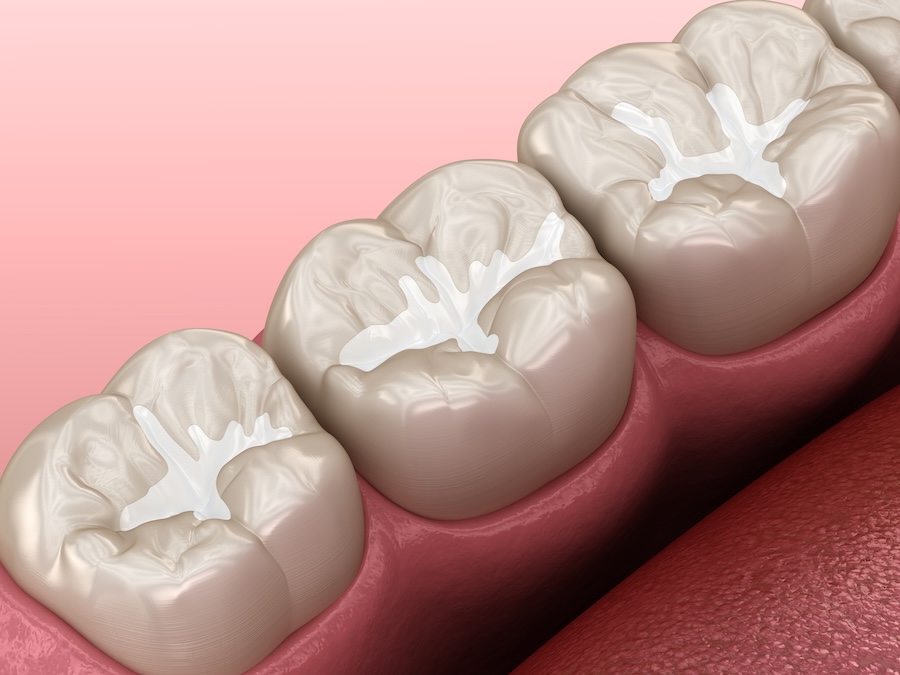
A sealant is a thin coating that flows into pits and grooves on a tooth’s chewing surface. Once it hardens, it covers the narrow spaces where plaque and food can collect. The smoother surface is also easier to brush clean.
Back teeth are the usual candidates because their grooves can be deep and narrow. Even thorough brushing can struggle to reach the bottom of those spaces. By filling in a suitable groove, the sealant creates a surface the bristles can clean more easily.
The rest of the tooth still needs daily care. Sealants don’t cover the spaces between teeth, the sides, or exposed roots. Keep brushing and cleaning between teeth, and we’ll discuss any added protection for the surfaces where you’re getting cavities.
Teeth That Benefit Most
You don’t age out of deep grooves just because you’re past the school sealant years. If an adult molar has a healthy, unfilled chewing surface that’s hard to keep clean, we can check whether sealing it would help. We’ll also look at where recent cavities have started, so we protect the surfaces that are actually giving you trouble.
For example, medication-related dryness or frequent snacking can raise cavity risk. However, if decay is mostly starting between your teeth, sealing the tops won’t reach the main problem. We’ll show you how to clean those spaces and discuss fluoride protection, along with any dryness or frequent snacking that’s increasing your risk.
Some adults also have trouble reaching the back teeth because of arthritis, reduced hand strength, or limited opening. In that case, we can help with cleaning tools while considering sealants on suitable grooves. The daily routine needs to be something you can actually manage.
Sealants or Fillings
A dark groove can be stain, an early weakened area, or a deeper cavity. Before placing a sealant, we examine the surface and use X-rays when needed to check the tooth. A stained but healthy groove can be sealed, while a tooth with a deeper cavity needs a repair.
If the enamel has started weakening but hasn’t formed a hole, sealing the area can sometimes stop further damage. Afterward, we check that the coating remains intact and the area stays stable. The protection depends on maintaining that seal over time.
Once a cavity has created damage that needs repair, a filling replaces the affected tooth structure. Likewise, a sealant won’t repair a broken corner or support a crack. Those teeth need treatment that can handle the damage already there.
An old filling can also occupy most of the chewing surface. If there’s little groove left to protect, we’ll concentrate on its edges and any remaining vulnerable areas. Decay beside a filling needs more than a coating over the top.
What Placement Feels Like
First, we clean the tooth and keep it dry. Next, we prepare the enamel, apply the material into the grooves, and harden it with a special light when the product requires it. Finally, we check the coverage and how your teeth meet.
Sealants go on without numbing or drilling. You’ll notice rinsing, air, and suction while we keep the tooth clean and dry for the coating. Once it hardens, we’ll have you bite together and adjust any spot that feels too high.
Follow the eating instructions for the material used, then keep brushing and flossing as usual. If a rough spot or changed bite bothers you later, contact us. We can smooth a rough area or adjust a high spot so your teeth meet comfortably.
Dry Mouth and Other Prevention
Saliva helps wash away food and neutralize acids. When your mouth stays dry, teeth can develop decay more readily, including surfaces a sealant won’t cover. We can review medication changes and discuss ways to manage dryness alongside tooth protection.
If dryness has brought a sudden run of cavities, sealing a few grooves won’t cover every vulnerable surface. We can discuss added fluoride protection and check whether frequent snacks or sweet drinks are keeping teeth exposed to sugar. Before you leave, we’ll show you which parts of the routine protect the grooves and which protect the sides, roots, and spaces between teeth.
Checking Sealants Over Time
Sealants can last for several years, but chewing gradually wears them. We inspect for thinning, chips, and lost areas during dental visits. A worn section can need repair or replacement before plaque starts collecting in the groove again.
Adult insurance coverage varies, so we can review the fee and check benefits beforehand. You’ll know what’s being recommended for each tooth and the expected cost. If coverage excludes adult sealants, you can still compare the fee with the protection we expect for each recommended tooth.
Adult Sealants at Blue Valley Smiles
If deep grooves keep turning into fillings, let’s review what can protect the remaining surfaces. Dr. Karabas, Dr. Naasz, and our team can check which teeth are suitable and how sealants fit your routine. Schedule a visit at Blue Valley Smiles in Overland Park, and let’s help those back teeth stay out of trouble!
Categorised in: Blog, Dental Sealants